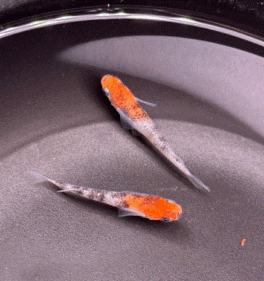

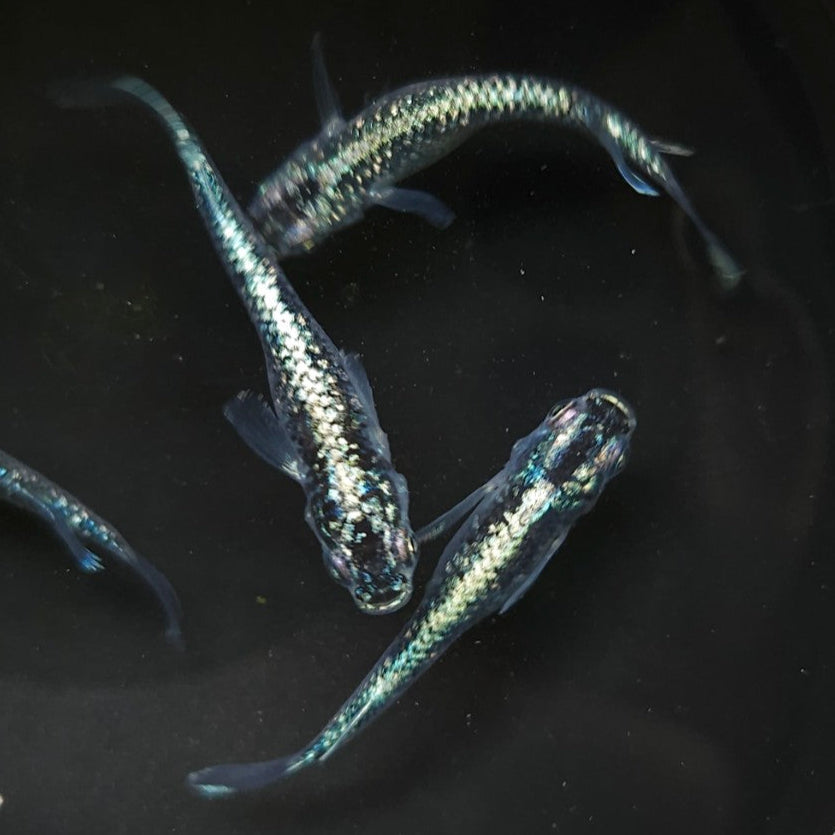
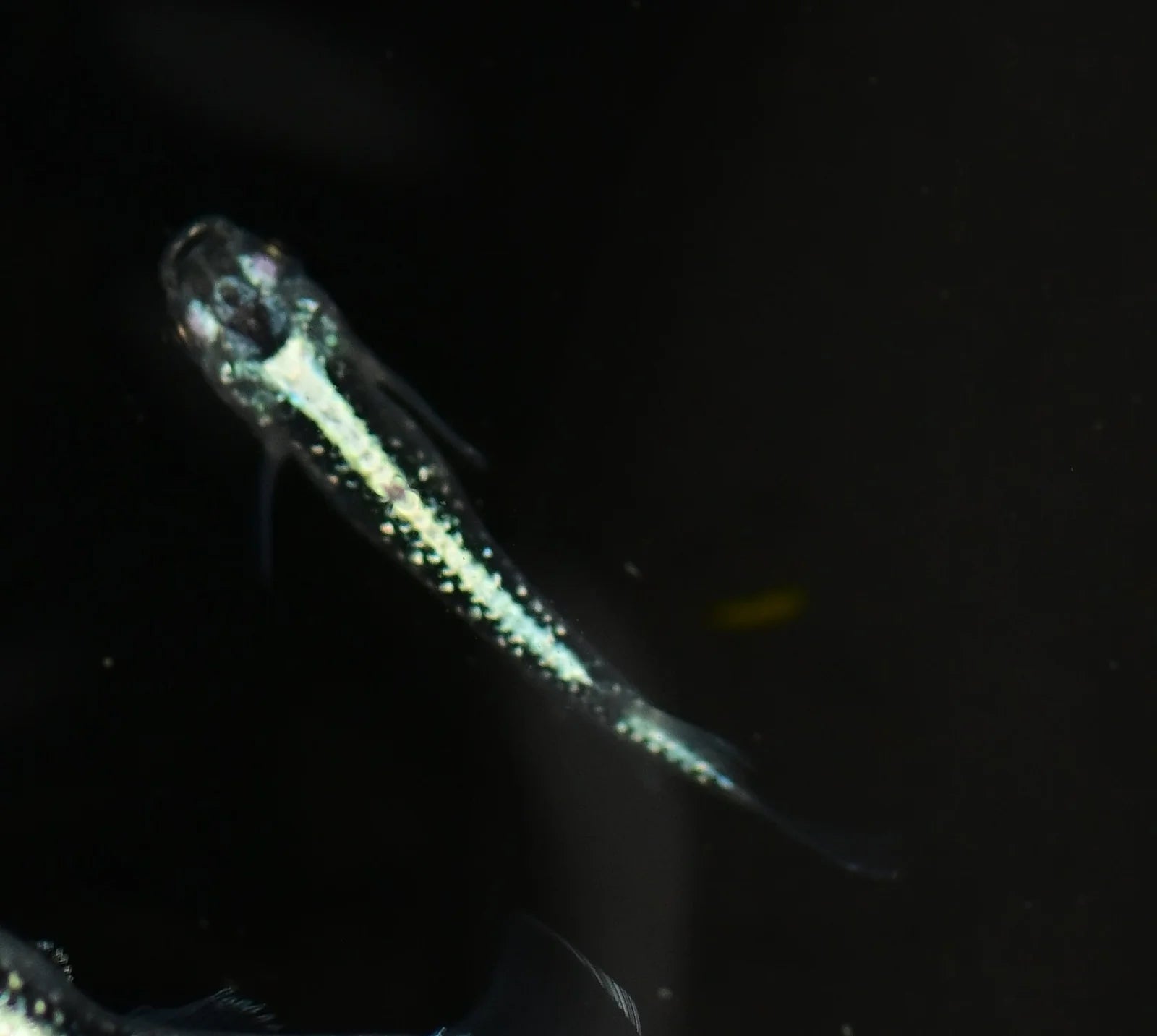
If you’ve kept medaka for a while, you may have noticed something: they don’t really use depth. Even in deep setups, most of their day happens near the surface, moving side to side instead of up and down.
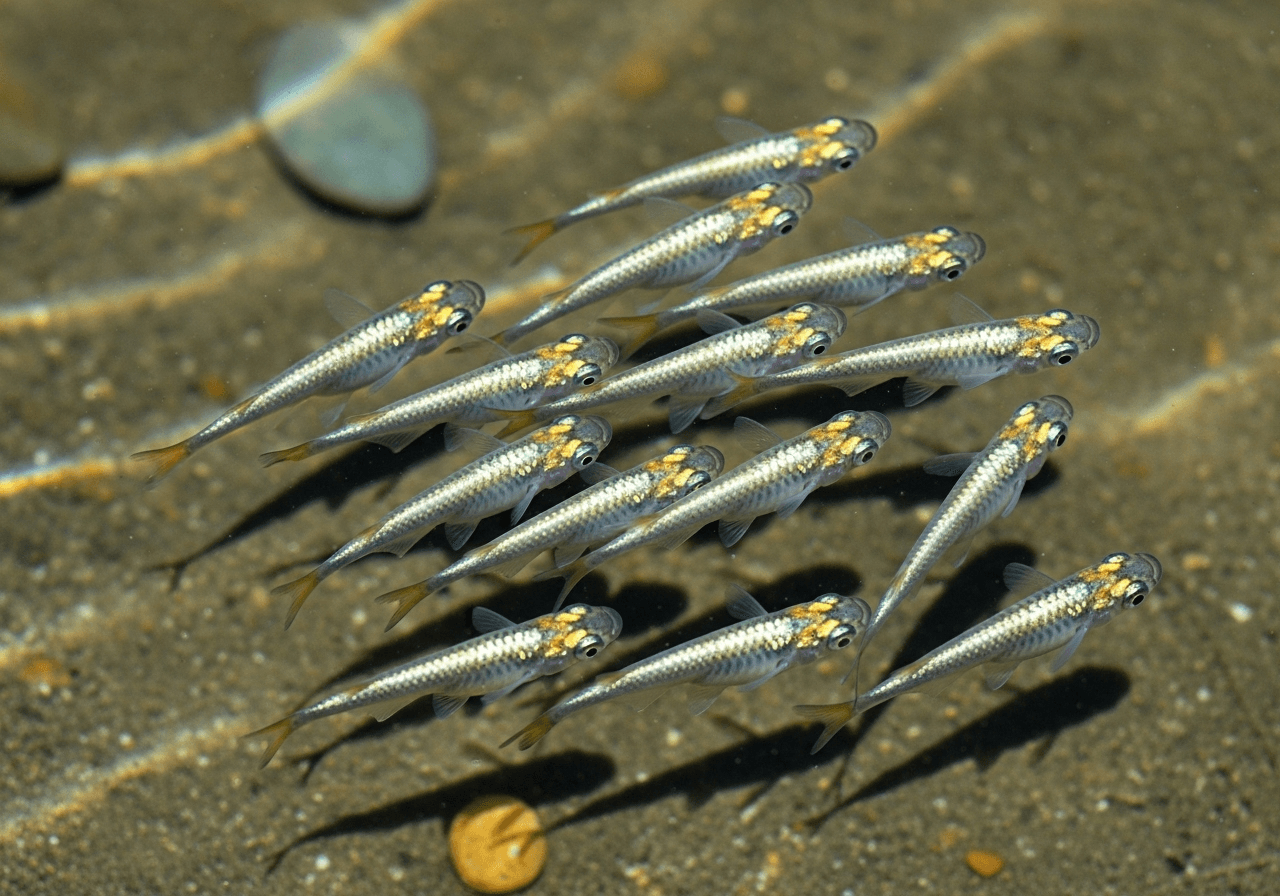
Top-view behavior is where medaka spend most of their time.

A wide tub setup gives medaka the space they naturally use.
Medaka Come From Shallow Water
In nature, medaka are often found in rice paddies, irrigation channels, and shallow ponds. These places are wide, plant-filled, and usually not very deep.
That’s why medaka naturally stay close to the surface where light, oxygen, and food are easier to access. Depth was never something they needed, so their behavior never grew around it.

Shallow, plant-rich water is the kind of environment medaka are built for.
More Surface Area Usually Means More Oxygen
Oxygen enters the water at the surface. That’s also where gases leave. So when you switch from deep-and-narrow to shallow-and-wide, you’re giving the water more “breathing room.”
Medaka can tolerate low oxygen better than many fish, but they still do better when oxygen is plentiful. They tend to stay more active, eat more consistently, and look stronger overall.

Same idea, different shape: surface area changes everything.
Shallow Water Stays More Stable
Wide containers warm up and cool down more evenly because heat spreads across a broad surface. In deeper containers, it’s common to get warm water sitting on top and cooler water underneath.
When that happens, fish end up moving between zones all day without you noticing. Over time, that extra effort adds stress and wasted energy.

Outdoor tubs tend to stay steadier when the setup is wide and shallow.
They Swim Side to Side, Not Up and Down
Medaka are horizontal swimmers. Their schooling behavior is built around moving left and right. Shallow tubs let them do that naturally without turning the day into a constant up-and-down workout.
Less wasted movement can leave more energy available for growth, color development, and breeding over time, especially in a planted setup where fish are constantly weaving through cover and returning to the surface.

A wider footprint supports natural schooling patterns.
Light and Tub Color Matter More Than People Think
Medaka respond strongly to what they see beneath them, which is why tub color changes how they look. Shallow water lets light hit the bottom more clearly and evenly, so fish settle into stable coloration faster.
In deeper water, light scatters and reflections are less consistent. Color expression can look uneven, especially in hikari, lamé, and darker-bodied varieties.

Dark tubs make it easier to see clean color and contrast.

Blue tubs can also support strong, consistent expression.
Spawning Happens Near the Surface
Medaka naturally spawn close to the surface, often around floating plants or roots. In shallow containers, spawning spots are easier to find, eggs don’t fall far, and fry tend to have a better start.

Floating plants and roots are a natural place to find eggs and baby fry.
Summary
Shallow & Wide
- More surface area for gas exchange
- More even temperature top-to-bottom
- Natural horizontal swimming space
- Clearer light + steadier color expression
- Spawning and fry behavior fits the setup
Deep (Especially Narrow)
- Less surface area for oxygen exchange
- Temperature layering is more common
- More unnecessary vertical movement
- Color expression can look inconsistent
- No real advantage for spawning
Final Thoughts
Medaka aren’t deep-water fish. They’re surface-oriented, light-driven, and built for horizontal movement. That’s why shallow, wide containers consistently produce healthier fish and more reliable results.
In very cold regions, a deeper tub or a pond can actually be the safer choice in winter. Deeper water changes temperature more slowly, water parameters tend to stay steadier, and the entire volume is less likely to freeze solid. That extra thermal buffer is a big reason ponds overwinter fish so well.

In deeper water, the lower layers tend to stay more stable through cold swings.