
Our Medaka Raising Environment

A lot of people ask about our raising environment and how we manage our medaka, so we wanted to share a little more about our setup and approach.
Temperature
Temperature varies daily and changes significantly depending on the season. Since many of our setups are outdoors under natural conditions, our fish experience seasonal temperature fluctuations similar to how medaka are traditionally raised in Japan.
View Local Raleigh, NC WeatherpH
Our water is generally maintained around a pH of approximately 7.0. We focus more on overall stability rather than constantly chasing exact numbers, since sudden environmental swings can create unnecessary stress for medaka.
Our Philosophy
At SNR Medaka USA, we raise our fish outdoors under natural sunlight, fresh air, rain, and seasonal conditions here in North Carolina.
Our goal is to create an environment where medaka can stay healthy long term and continue breeding naturally.
Each strain is managed separately so we can focus on health, stability, and consistency over time.
Medaka are far more sensitive to their environment than many people realize. Water quality, sunlight, temperature, container color, density, food, stress levels, and even small environmental differences can affect their coloration, growth, behavior, and overall condition.
This philosophy also helped inspire the creation of the American Medaka Association , a free and open community for people who value thoughtful, transparent, and responsible medaka keeping.
Outdoor Raising Environment
Most Japanese medaka are originally raised outdoors in regions with four distinct seasons. Because of that, we also manage many of our fish outdoors here in North Carolina under natural sunlight conditions.
Sunlight is extremely important for medaka. It affects coloration, activity levels, growth, and overall health.
At the same time, excessive summer heat can become stressful, so we use shade cloths and carefully position our tubs to help prevent overheating.

Tub Colors & Strain Management
We use different tub colors depending on the strain.
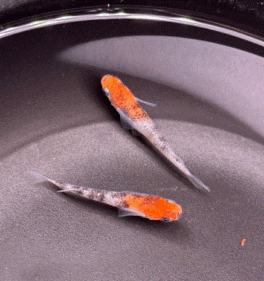
Some varieties develop deeper coloration in black tubs, while others show cleaner expression in lighter-colored containers.
Does Tub Color Change Medaka Color?
Fish Density & Fry Management
We try to avoid overcrowding whenever possible.
When medaka are kept too densely, stress, slower growth, and water quality issues can develop very quickly.
Because of that, we often separate fish by:
- Size
- Strain
- Growth stage
- Overall condition
Fry are especially sensitive, so we manage them separately to reduce food competition and pressure from larger fish.
Natural Outdoor Ecosystem
Since many of our setups are outdoors, it is normal to occasionally see small insects, mosquito larvae, pollen, natural debris, or other small living organisms in the tubs.
This is completely normal in outdoor medaka keeping and does not negatively affect the fish.
Water Quality & Water Changes
Water quality is something we take very seriously.
We always use cycled water and aged water, and we try to avoid sudden environmental changes as much as possible.
Our water change schedule varies depending on season, fish density, tub color, sunlight exposure, and overall water condition.
Summer
During summer, we usually perform large water changes of around 70–90% about once a week. Warmer temperatures increase feeding activity and waste buildup, so maintaining water quality becomes especially important.
Spring & Fall
During spring and fall, we tend to be more careful because temperatures fluctuate more during seasonal transitions. We usually perform water changes about once every two weeks during these periods.
Winter
In winter, we rarely perform major water changes. Instead, before deep winter begins, we typically prepare the fish for winter by performing a large water change of around 90%, then try to keep the environment as stable as possible throughout the colder months.
Imported Fish Quarantine
For imported fish, quarantine is an extremely important part of our process.
Environmental changes alone can place a lot of stress on medaka, so we do not immediately mix or move fish around without carefully observing their condition first.
We created a separate page explaining our quarantine process in more detail.
Read Our Quarantine ProcessAlways Learning
We are still learning every day ourselves. The deeper you get into medaka, the more detailed and complex the hobby becomes.
But we continue trying to improve little by little so we can provide healthy medaka raised in the best environment possible.