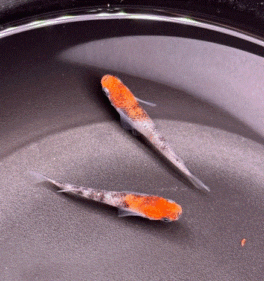

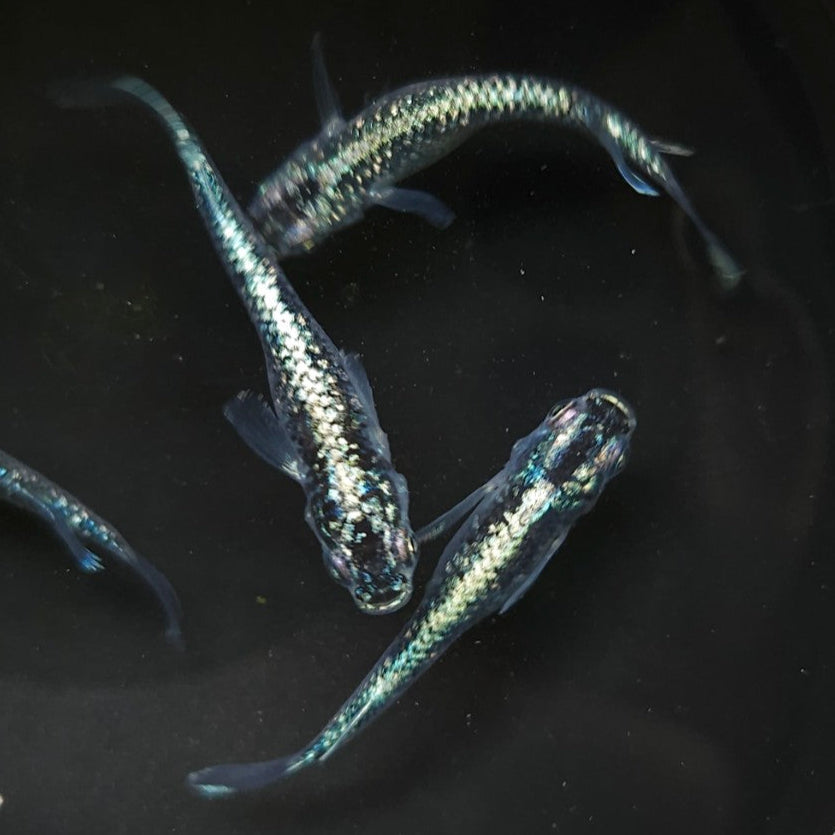
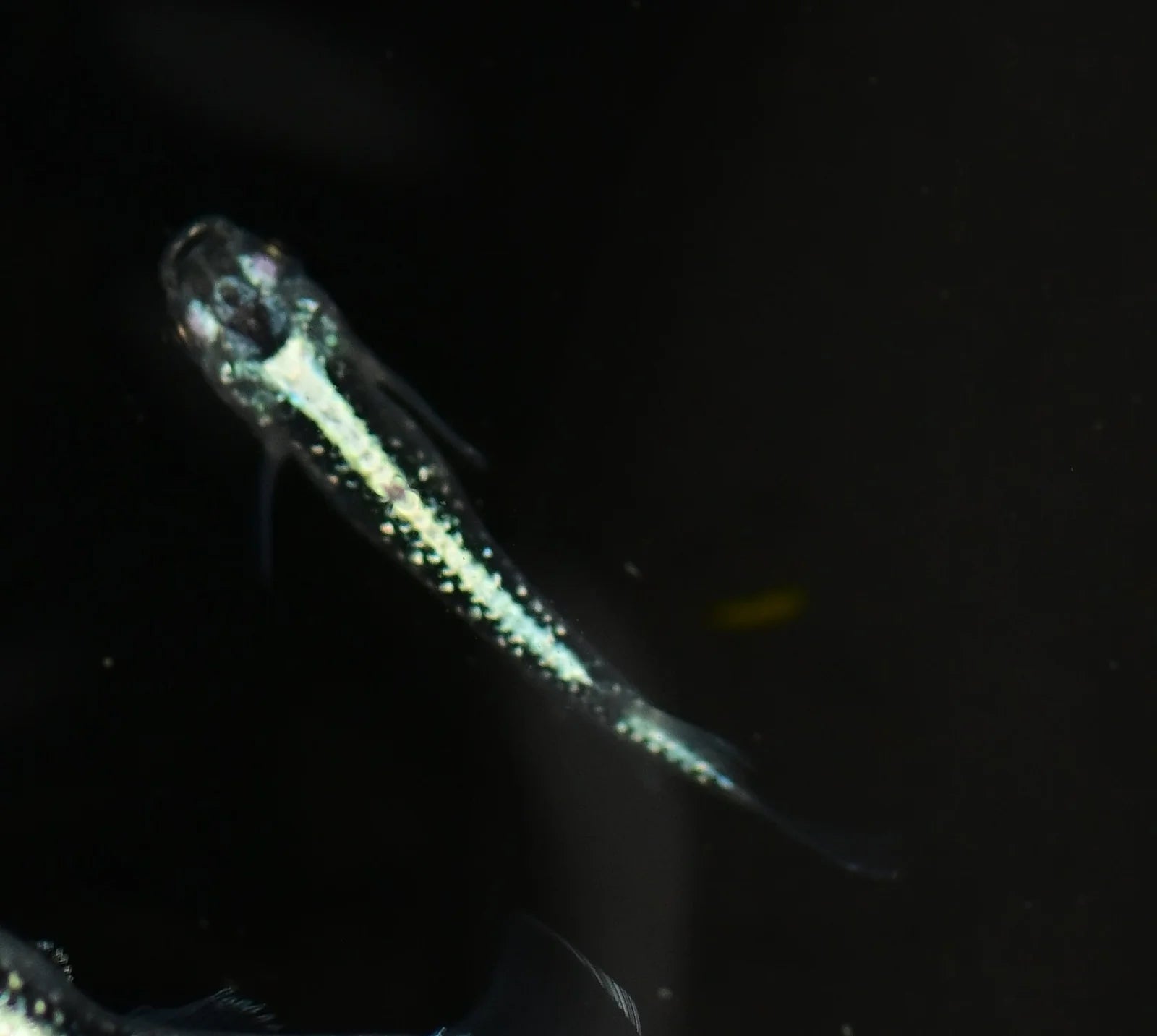
If your medaka looks different after you move it to a new tub, you’re not imagining it. Container color plays a real role in how medaka express their color. The fish didn’t suddenly become a different strain. Most of the time, it’s reacting to the background.
- Dark tubs often make medaka look deeper and more intense.
- Light tubs often make medaka look lighter or “washed out.”
- This is pigment dispersion vs. aggregation, not “new pigment.”
Why medaka look different in different tubs
Medaka adjust pigment expression based on their surroundings. This response is often called background reaction, and it’s closely related to what many hobbyists casually refer to as protective coloration.
In dark containers, medaka tend to appear deeper and more intense. In light-colored containers, they often look lighter. What’s changing is how pigment granules inside pigment cells are spread out (dispersion) or pulled together (Aggregation).
Dispersion vs. Aggregation
Dispersion
Pigment granules spread throughout the cells, making the body appear darker and more saturated. This commonly happens when fish are moved into black or dark-colored tubs.
Aggregation
Pigment granules cluster together, causing the body to look lighter or washed out. This is often seen when fish are moved from dark tubs into white or light-colored containers.
Tub color does not create new pigment. It only changes how existing pigment is displayed.
Two types of color change
Short-term change (minutes to hours)
Some color changes happen very quickly. A pale medaka placed into a black tub may darken within minutes. This is a fast, physiological response.
Long-term change (weeks to months)
Other changes happen gradually with consistent conditions. Over time, container color can influence how pigment is distributed as the fish grows. This is why fish raised in different tubs may look surprisingly different.
This long-term effect is often misunderstood. Many keepers assume a fish is low quality or misrepresented, when in reality it simply developed under different conditions.
How experienced breeders use tub color intentionally
Many serious medaka breeders don’t rely on a single tub color. Instead, they change container colors depending on growth stage and the traits they want to highlight. This isn’t a trick. It’s simply working with the fish’s natural response.
Recommended tub colors by growth stage

Fry stage
Under 0.4 in (1 cm)
During the fry stage, white tubs are commonly used. Fry are easier to see, feeding behavior is easier to monitor, and waste buildup is more noticeable.
- Better visibility for feeding and health checks
- Easier water maintenance during heavy feeding
- Helpful for early evaluation of shine-based strains
Juveniles
0.4–0.8 in (1–2 cm)
At this stage, external light and lamé begin to appear. White tubs still work well for observation, but size differences start to matter. Separating fish by size improves growth and survival.
- Early trait evaluation becomes possible
- Size separation reduces competition
- Promising individuals can be prioritized
Young fish to adults
0.8–1.2 in (2–3 cm) and up
Once body shape and traits are established, many breeders move fish to gray or black tubs. These colors help bring out depth, contrast, and overall finish.
Gray tubs
A balanced option that enhances body color without hiding lamé or external shine.
Black tubs
Best for deep reds, strong contrast, and darker patterns. Use intentionally and allow time for results.
Choosing tub color by strain type

White tubs
- Miyuki and external light strains during early growth
- Pale blue strains for clean, bright coloration
- Orochi-type fish when focusing on body silhouette
Gray tubs
- Lamé strains such as Sapphire and Yozakura
- Strains balancing body color and shine
- External light combined with patterned bodies
Black tubs
- Youkihi and other deep orange-red strains
- Patterns requiring stronger contrast (sumi, mottling)
- Final finishing for richer coloration
A common misconception is that tricolor medaka must be raised in black tubs. Tub color does not increase pigment. It only changes how existing pigment is expressed over time.
Final thoughts
Tub color affects more than appearance. It influences how medaka display pigment, how easily they can be evaluated, and how accurately their true potential is understood. With stable conditions and intentional tub choices, you’ll see your fish more clearly for what they are.
Image reference: Based on original illustrations created by Tetra. The text has been translated into English.
Prefer YouTube? Watch it here.